
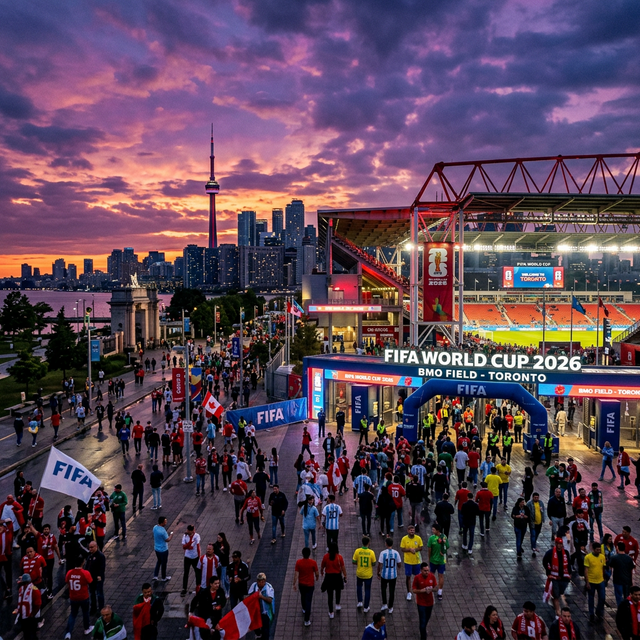
BMO Field Toronto: the complete FIFA World Cup 2026 guide
BMO Field in Toronto is the centrepiece of Canada's east coast World Cup presence. Situated at Exhibition Place on the Lake Ontario waterfront, it is Canada's largest soccer-specific stadium and the home of Toronto FC in Major League Soccer. The stadium will host six matches at the 2026 FIFA World Cup, including the critical Canada vs Morocco Group B fixture on June 23 — Canada's final group-stage match and potentially a qualification decider.
From 20,000 to 45,736: the expansion story
BMO Field opened on July 11, 2007, with a capacity of just 20,000 seats — purpose-built for soccer. The initial design was intentionally compact to create an intense atmosphere, and Toronto FC's early years benefited greatly from the tight sightlines. However, demand for a World Cup-ready venue drove three successive expansions. The 2010 expansion added approximately 1,500 seats to accommodate CFL games; the 2016 expansion brought capacity to approximately 30,000 with a new east stand and upper decks. The 2025 expansion — the largest of the three — added a complete north upper deck, new premium clubs, expanded media facilities and upgraded floodlighting to the FIFA Elite broadcasting standard of 2,400 lux, bringing total capacity to 45,736.
Natural grass advantage
Unlike BC Place in Vancouver (which uses artificial FieldTurf), BMO Field plays on natural grass, meeting FIFA's Elite pitch standards for international competition. This distinction matters: several national team federations, including Brazil, Argentina and the European powerhouses, have historically expressed a preference for natural grass competition. Canada vs Morocco at BMO Field on June 23 will be played on one of North America's premier natural grass pitches — a potential advantage for technically sophisticated teams.
Toronto as a World Cup city
Toronto's involvement in the 2026 World Cup extends beyond match days. The city has designated the waterfront Fan Zone, stretching along Queens Quay from Harbour Square Park to Exhibition Place, as the primary public viewing area — expected to accommodate over 50,000 people per match day. Union Station, one of North America's busiest rail hubs, serves as the main transit gateway. GO Transit from Hamilton, Burlington, Oakville, Mississauga, Brampton, Barrie, Pickering, Ajax and Whitby will all feed additional fans into the city for match days, with GO operating extended late-night service after evening kickoffs.
June 23 — Canada vs Morocco: the stakes
The Canada vs Morocco match on June 23 falls on the final group-stage matchday for Group B. By this point, Canada will have played Brazil in Vancouver and Colombia in Vancouver — the result entering the Morocco match will determine whether Canada needs a win, a draw, or can afford a loss while still advancing as one of the best third-place teams. Morocco, who reached the semi-finals at the 2022 World Cup in Qatar, represent a genuine test. The 45,736-capacity sellout crowd at BMO Field, combined with the national significance of the moment, makes this fixture one of the most anticipated Canadian sporting events in decades. See our BMO Field World Cup 2026 venue guide.