
BC Place Vancouver: the complete FIFA World Cup 2026 guide
BC Place in Vancouver, British Columbia, will be one of the most memorable venues at the 2026 FIFA World Cup — not for its size, but for its significance. This is where Canada will play all three of its home group-stage matches for the first time in history. The stadium, opened on June 19, 1983, has hosted everything from rock concerts to the 2010 Winter Olympics ceremonies, but the 2026 World Cup represents its most significant sporting event since the 2015 FIFA Women's World Cup Final.
Architecture and the famous roof
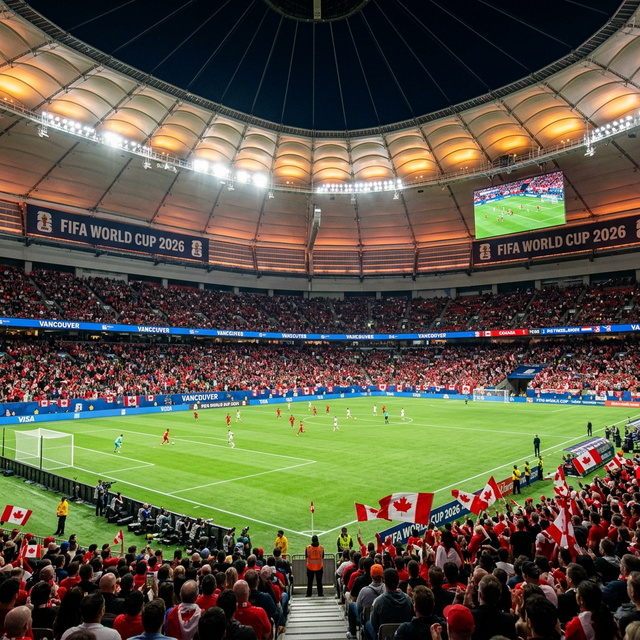
BC Place's most distinctive feature is its retractable PTFE-coated fibreglass roof, installed during the landmark $563 million renovation completed in 2011. The roof spans 28,000 square metres and opens or closes in approximately 20 minutes — a major weather advantage in Vancouver's June climate, which sees an average of 12 rainy days. The original air-dome roof, which required constant air pressure to maintain its shape, was replaced entirely. The new cable-supported structure is the largest of its type in North America. Natural light enters through translucent PTFE panels, reducing artificial lighting requirements by up to 60% during daytime events.
The 2015 Women's World Cup experience
BC Place hosted the 2015 FIFA Women's World Cup Final on July 5, 2015, between the United States and Japan. The match drew 53,341 spectators and a global television audience of 750 million — the most-watched women's sporting event in history at the time. USA's 5–2 victory included a Carli Lloyd hat-trick and a midfield goal from 54 yards. The logistical success of that tournament gave FIFA confidence in Vancouver's ability to handle 2026 demand. BC Place's operations team, stadium transport planners, and the City of Vancouver's event management division all retain institutional knowledge from 2015.
Artificial surface: what players and fans need to know
BC Place uses the Shaw Blue Zone Field, a third-generation FieldTurf artificial surface certified to FIFA Quality Pro standard — the highest FIFA certification for artificial pitches. The surface meets FIFA requirements for ball bounce (0.6–1.0 m rebound from 1.0 m drop), ball roll (4–8 m on 45° ramp test), shock absorption (60–70% HV) and rotational resistance (25–50 Nm). Despite meeting every technical specification, artificial surfaces remain controversial among elite players — some national team medical departments prefer additional warm-up protocols for injury prevention. FIFPRO (the world players' union) has historically flagged artificial ground concerns; FIFA's position is that the BC Place surface has cleared all required tests.
Canada vs Brazil — June 13, the match of the tournament opening
The first Canada home match — Canada vs Brazil on June 13, 2026 — may be the most anticipated match of the entire group stage. Canada arrives as a legitimate contender in CONCACAF, having qualified for their first World Cup in 36 years at Qatar 2022 and recording their strongest-ever results in the CONCACAF Nations League since. Brazil, one of the tournament favourites under their new coaching setup, faces a genuine challenge on an artificial surface in front of a packed 54,500-capacity Canadian partisan crowd. The fixture is expected to sell out within hours of general sale tickets becoming available. See our BC Place World Cup 2026 venue guide.