 MONTERREY — FIFA World Cup 2026" style="width:100%;height:440px;object-fit:cover" loading="eager">
Estadio BBVA Monterrey: complete FIFA World Cup 2026 guide
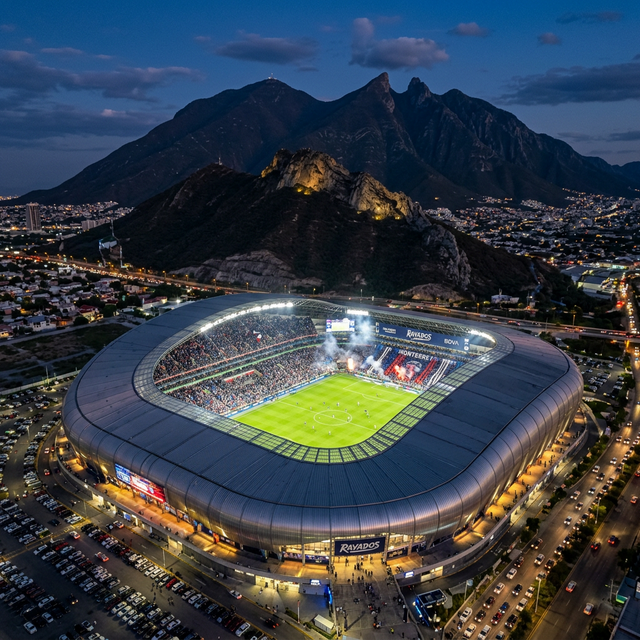
Estadio BBVA in Guadalupe, Nuevo Leon (part of the greater Monterrey metropolitan area) is the newest of Mexico's three World Cup 2026 venues, opened in 2015. The home of CF Monterrey — one of Liga MX's most successful clubs — holds 53,500 in its World Cup configuration and offers one of the most visually striking natural settings of any venue in the tournament: the Sierra Madre Oriental mountain range rises dramatically behind the open south end of the stadium, creating a backdrop unlike anything at other World Cup venues.
Design and atmosphere
Estadio BBVA was designed by Populous (the company behind many of the world's best stadiums) and features a distinctive undulating roof that sweeps across three sides of the bowl while leaving the south end open to reveal the mountains. The steep, close upper tiers create an intimate and loud atmosphere — CF Monterrey's Rayados fans are among the most passionate in Mexico, and the compact design amplifies crowd noise considerably. For World Cup group stage matches, this combination of fierce local soccer culture and dramatic mountain views will make Estadio BBVA one of the tournament's memorable venues despite its relatively modest capacity.
Monterrey and Canadian fans
Monterrey is Mexico's third-largest city (population 4.7 million) and its industrial and commercial capital — sometimes called the "industrial capital of Mexico." The city has a high standard of living by Mexican standards, with modern infrastructure, international hotels and extensive English-language services in the business districts. Several major airlines connect Toronto and Vancouver to Monterrey International Airport (MTY), though connections are more limited than Mexico City. American Airlines, United and Aeroméxico provide the most frequent links. Ground transport from MTY to the stadium and major hotels takes 30–50 minutes depending on traffic.
Altitude: a moderate factor
At 538 metres, Monterrey sits significantly lower than Mexico City (2,240m) and Guadalajara (1,566m). This altitude is broadly comparable to Calgary or Edmonton — enough to note for athletes at peak cardiovascular intensity but not the significant acclimatization challenge of the Azteca. Canadian fans will notice no meaningful difference at Monterrey's altitude. See our Estadio BBVA World Cup 2026 guide.