⚽ FIFA World Cup 2026 — June 11 to July 19
--Days
--Hrs
--Min
--Sec
🏇 16 Stadiums · 3 Nations · 104 Matches
ESTADIO AZTECA <em style=MEXICO CITY — FIFA World Cup 2026" style="width:100%;height:440px;object-fit:cover" loading="eager">
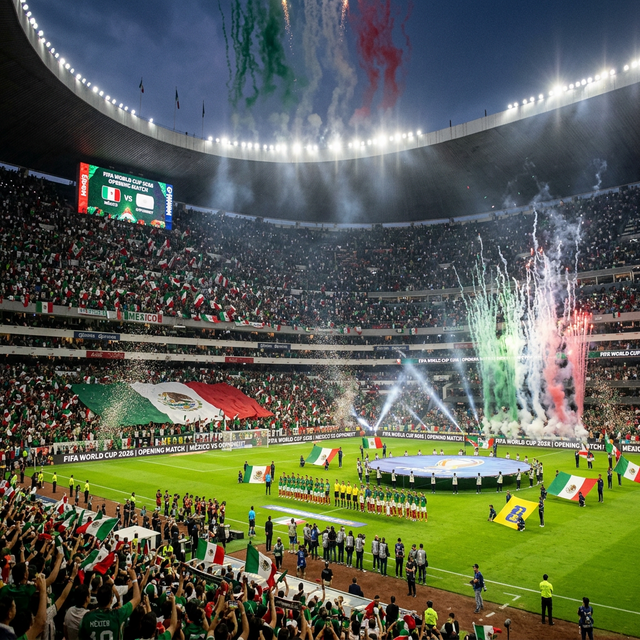
OPENING MATCH — JUNE 11, 2026 • 3 WORLD CUPS

ESTADIO AZTECA MEXICO CITY

Capacity 87,523 · Opening Match Jun 11 · Altitude 2,240m · Mexico City, CDMX

87,523
Capacity
5
WC Matches
Jun 11
Opening
2,240m
Altitude
1966
Built
3x
World Cup host
Venue details

ESTADIO AZTECA — Key Facts

ESTADIO AZTECA — complete fact sheet
DetailInformation
Full nameEstadio Azteca
LocationCalz. de Tlalpan 3465, CDMX 04870
Capacity (WC 2026)87,523
SurfaceNatural grass
RoofOpen-air (partial upper canopy)
Opened1966
Previous WC Finals1970 (Brazil 4–1 Italy) & 1986 (Argentina 3–2 W. Germany)
2026 WC roleOpening Match — June 11, 2026
Altitude2,240 m above sea level
NFL ownersClub America & Cruz Azul (share)
Distance to NAICM airport~45 km northeast (new airport)
Distance to Benito Juarez (MEX)~20 km southwest
Gallery

Photos

ESTADIO AZTECA — World Cup 2026
June–July 2026

ESTADIO AZTECA Match Schedule

FIFA World Cup 2026 matches — ESTADIO AZTECA
DateMatchRoundKickoff
Jun 11, ThuOpening Match — TBD vs TBDOpening12:00 PM CT
Jun 15, MonGroup B — MatchGroup BTBD
Jun 19, FriGroup D — MatchGroup DTBD
Jun 23, TueGroup F — MatchGroup FTBD
Jun 26, FriGroup H — Final matchdayGroup HTBD

Estadio Azteca Mexico City: complete FIFA World Cup 2026 guide

Estadio Azteca in Mexico City is the most historically significant venue in FIFA World Cup 2026. On June 11, 2026, it will host the Opening Match — becoming the only stadium in history to open three separate FIFA World Cup tournaments. The 1970 World Cup opened here (Brazil won); the 1986 World Cup opened here (Argentina, led by Maradona, won); and 2026 continues this extraordinary legacy. No other stadium comes close to this record.

The two greatest moments in World Cup history

The Azteca's roll call of historic moments is unmatched. In the 1970 quarter-final, Italy defeated West Germany 4–3 in extra time — known as the "Game of the Century," considered the greatest World Cup match ever played. In the 1986 quarter-final, Diego Maradona scored both the "Hand of God" goal and the "Goal of the Century" against England. Both matches occurred at the Azteca, 16 years apart. In the 1986 Final, Maradona lifted the trophy at this stadium, cementing its place at the very summit of football history.

Altitude: the key factor for visiting teams

At 2,240 metres (7,349 feet) above sea level, Mexico City's altitude reduces oxygen availability by approximately 25% compared to sea level. This affects athletic performance — a standard test run at altitude delivers markedly lower results than at sea level. Research suggests that teams unacclimatized to altitude suffer measurable decreases in sprint speed, aerobic capacity and recovery time, particularly in the first 90 minutes of competition. FIFA builds mandatory acclimatization time into the fixture schedule; teams playing at the Azteca will typically arrive 5–7 days early to adapt. Canadian fans will also experience altitude effects — headaches, shortness of breath, fatigue — during the first 24–48 hours in Mexico City.

Getting there from Canada

Both Air Canada and WestJet fly direct from Toronto to Mexico City (MEX). Air Canada also serves Mexico City from Vancouver and Montreal. Aeroméxico and Volaris offer additional connections. The city's new Santa Lucía International Airport (NAICM) is approximately 45km from the Azteca; the historic Benito Juárez airport is only 20km away and still serves some international routes. Mexico City's extensive Metro system reaches Estadio Azteca station directly on Line 2 (blue line), making stadium access straightforward from any of the city's major hotel districts. See our Estadio Azteca World Cup 2026 venue guide.

← Back to Home

Estadio Azteca: The World's Most Historic Football Venue

No stadium carries more World Cup history than the Azteca. It hosted the 1970 Final (Brazil 4-1 Italy, Brazil's third title), the 1986 Final (Argentina 3-2 West Germany, Maradona's second World Cup), and the 1986 quarter-final containing Maradona's "Hand of God" and solo dribble goals against England — two of football's most analyzed moments. In 2026, the Azteca hosts the tournament opener, its third distinct World Cup tournament.

The stadium sits at 2,240 metres above sea level in Mexico City's Coyoacán district. Altitude acclimatization matters: Canadian fans arriving from sea level may experience headaches, fatigue, and shortness of breath for the first 48-72 hours. Physicians recommend arriving 3-4 days early and avoiding alcohol until fully adjusted. The thin air also affects how the ball moves — players and observers consistently note the ball travels further and bends less at altitude.

Mexico City's Benito Juárez International Airport (MEX) is 30km from the stadium. The Metro Line 2 (Blue) stops at General Anaya, 1.5km from the Azteca, with a 20-minute walk or short taxi. The Metrobús Line 4 stops closer, at Estadio Azteca station. June marks the start of Mexico City's rainy season — afternoon thunderstorms are common, typically clearing by evening. Bring a waterproof layer for daytime sightseeing. Visit our Estadio Azteca World Cup 2026 venue guide for more.

The 2026 FIFA World Cup marks the first edition with 48 national teams competing across 16 cities in Canada, the United States and Mexico. With 104 matches scheduled from June 11 to July 19, 2026, this tournament sets a new record for the largest World Cup in history. Three host nations competing simultaneously creates a cross-border sporting event unlike anything football has seen before. BC Place in Vancouver, BMO Field in Toronto and the Estadio Azteca in Mexico City are among the most iconic venues on the roster.